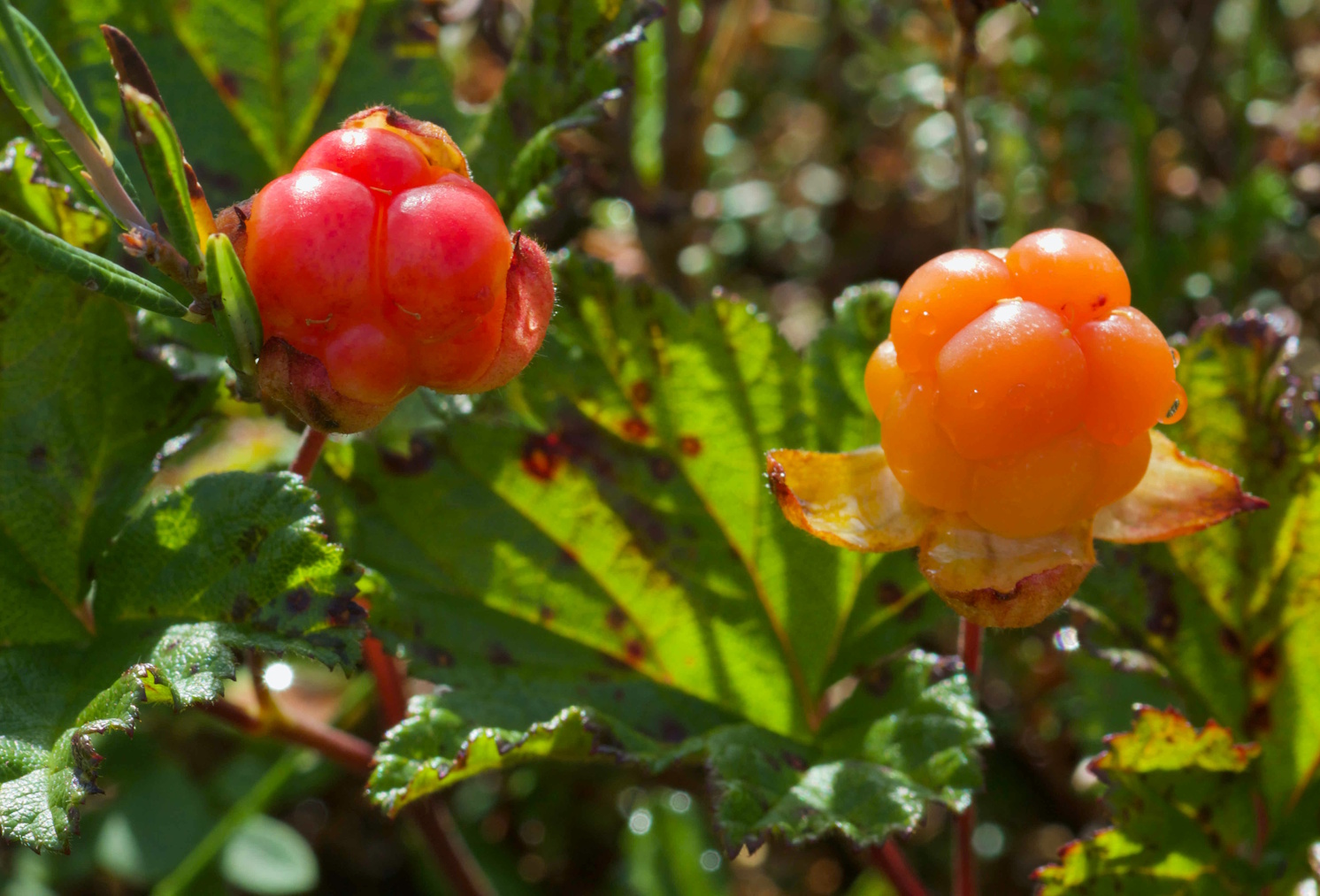
Berries are a valuable forest resource – in more than one way
The Nordic Berry Research Network has concluded its activities with a final webinar, bringing together researchers involved in the network to summarise outcomes and discuss future collaboration within Nordic berry research.
Photo: Ville Hallikainen
The network was established to strengthen knowledge exchange and collaboration between research on wild and cultivated berries in the Nordic region. Berries play an important role in Nordic food culture, horticulture and the multifunctional use of forests, as well as in food security. The network has addressed the need to better utilise synergies between wild and cultivated berry production, which have traditionally been studied separately.
During the network period, researchers from Finland, Sweden, Norway and Denmark have focused on shared challenges related to sustainability, climate resilience, production, utilisation and market development of berries.
Network activities have included webinars, workshops and stakeholder engagement, as well as the Nordic Wild Berry Conference held in Rovaniemi, Finland, in October 2025.
The final webinar provided an opportunity to reflect on the work carried out within the network and to discuss next steps, including continued collaboration and the development of joint Nordic research initiatives.
– One key insight was that wild berry use is changing but not disappearing. Foraging remains a popular and meaningful activity, closely linked to nature, well-being, and cultural identity. Many people still pick berries themselves and value wild berries for their naturalness, taste, health benefits, and local origin. These values strongly influence which berry products people trust and buy. Understanding consumers therefore helps businesses and policymakers develop products and value chains that align with societal expectations, says Rainer Peltola, coordinator of the network and senior scientist at the Natural Resources Institute Finland.
– By bringing together diverse perspectives – from consumers and forest owners to scientists and policymakers – the network showed that the future of wild berries is not only about yields and markets. It is about values, trust, and shared responsibility. With proactive approaches, Nordic societies can ensure that wild berries continue to be a living part of forests, cultures, and sustainable economies, says Rainer Peltola.
The presentation explores the enduring significance of wild berries in the face of societal, economic, and environmental transformations. Beginning with the evolution of forest general use, the talk examines key milestones – land reforms, the development of everyone’s rights, and the rise of commercial berry picking. The presentation also delves into the need for sustainable resource management and envisions potential futures for the utilization of wild berry resources, encompassing both industrial applications and recreational aspects. Amid uncertainty, the presentation underscores that informed, proactive approaches are essential for managing change and preserving the legacy of natural product use.
Issues of labour have always encountered the development of the wild berry industry in Sweden and Finland but are today more topical than ever. The current form of the industry is dependent on foreign workers, and has been accused for labour exploitation and even forced labour. Presently, the governments of Sweden and Finland are acting to improve the situation, which has put the procedures around activities of labour import in the wild berry industry to the test. This presentation introduces challenges of labour in the wild berry industry in Sweden and Finland and brings some future issues of labour migration to the table of discussion.
This presentation examines Swedish consumers’ perspectives on wild berries, with a particular focus on wild bilberries. It highlights why understanding consumer attitudes and values is essential for developing sustainable and trusted wild berry markets. Foraging remains an important cultural practice in Sweden, closely connected to nature, well-being, and everyday traditions. Consumers value wild berries for their naturalness, health benefits, taste, and authenticity, and often associate wild berry products with quality and sustainability. These perceptions play a key role in shaping product development and market acceptance. Building a sustainable wild bilberry market therefore requires aligning ecological responsibility, transparent value chains, and consumer expectations. By integrating consumer perspectives into research, policy, and market development, stakeholders can actively shape the future of wild berries.
The tradition of wild berry harvesting in Norway has deep roots, initially serving as a vital food source and, more recently, transitioning into a recreational activity. This shift aligns with the growing interest in local, sustainable food sources. Despite this, Norway’s infrastructure for picking, receiving, and storing these berries lags behind that of neighboring countries. Yet, the demand for Norwegian wild berries in various product lines is high. To address the need for a consistent supply of high-quality berries, research has been conducted on predictive models and mapping for optimal berry locations and yield estimations. Innovation and research have primarily focused on cultivating wild berry stands and studying the environmental impact on flowering, yield, and quality. Over time, new products have emerged, and many perceive potential in developing nature-based tourism. Towards the end of the presentation, potential business prospects will be discussed.