NKJ 60 years: “NKJ is an important pathway for knowledge to reach the global community”

NKJ has a long history. But we also have a future, which starts now. As we’re celebrating our 60th anniversary this year, we’ve asked the youngest generation in our board, in what way NKJ will be of most and best use in the future.
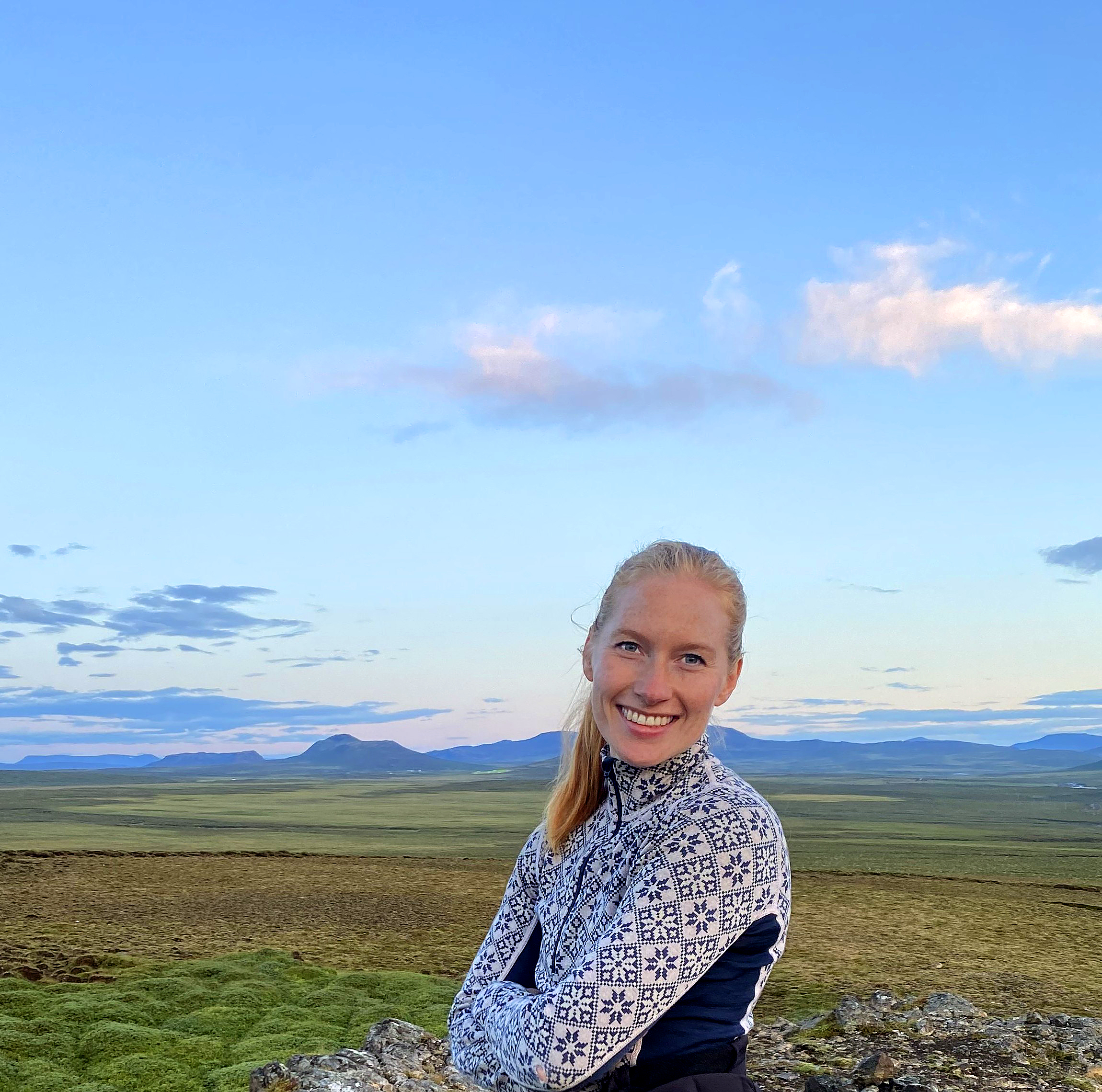
Smiling young woman, half figure, Icelandic views with grass, flat landscape, distant mountains and blue sky.
Jónína Sigríður Þorláksdóttir, youth member of the NKJ board. Photo: Private

Jónína Sigríður Þorláksdóttir, Agricultural University of Iceland, is the youth member of the NKJ board. The position has given her insight into, and the possibility to influence, NKJ’s work with interlinking researchers in the different Nordic countries, and to make sure that scientific knowledge is used in policy making.
– An important function that NKJ could develop further is to connect research and practice, she says.
– There we could really have an impact, also when it comes to looking at why it is so difficult to achieve.

Cooperation and synergies
She also emphasizes that NKJ has an important unifying function in the research community. Making sure that the same work isn’t done over and over again in the different countries, finding possible synergies and creating opportunities to benefit from each other’s experiences across national borders saves a lot of energy and time.
– NKJ could also be an important force in making research more transdisciplinary, and in providing a more holistic perspective on the issues. NKJ could look beyond the boundaries between different research fields, see the synergies. For example, when it comes to land use, NKJ could provide a more multifunctional way of looking at it.
– We also need to interest people in agriculture and make them want to engage in the issues – more people are needed in the sector!

Climate change
The climate issue is being discussed intensely, not least in Iceland. The changing climate will bring many new questions for the agricultural sector.
– Not least the degradation of our ecosystems is an issue that will be brought to the fore. As well as how we should connect our different systems, so that we get a circular system instead of, for example, consuming at one end and handling waste after consumption at the other.

Jónína also sees resilience as an important issue for the Nordic countries, and by that she means not for the future but right now.
– We are so extremely dependent on the outside world, so how do we take small steps to ensure that, in the face of increasing conflicts or environmental change, we have sustainable systems?

Knowledge exchange outside the Nordic region
When it comes to external contacts, for example with the EU, she believes that the Nordic countries have a lot of knowledge to share with others.
– Our countries are less suited climate-wise for agriculture, in many places we have harsher conditions, so we also have experiences and knowledge based on that to share.
– NKJ is a very important pathway for this knowledge to reach the global community.
– With NKJ we have a stronger Nordic voice, and a broader and stronger knowledge base!
NKJ 60 years anniversary: where are we going now?

NKJ turns 60! With such a long experience of Nordic cooperation in the agricultural and food sector, we are now moving forward into the future. But what do we actually bring with us, and where are we heading now?


NKJ was founded in 1965, as a body for financing joint Nordic research projects in the agricultural sector. The money came from the membership fees paid by each country. Today, financing comes from both the member countries and the Nordic Council of Ministers, and the activities have both grown and changed.

Suvi Ryynänen.

– Now we finance cooperation between researchers but have no research projects of our own, says Suvi Ryynänen, Ministry of Agriculture and Forestry, who has been a member of NKJ’s board since 2003.

– The financing of joint Nordic projects had a great significance in the beginning, after the war, when a cross-national research collaboration was to be started. Before the EU, Nordic cooperation was the most important arena for collaboration, says Niels Götke, Head of Division at the Danish Agency for Science and Higher Education and member of the NKJ board since 2010.

The cooperation has not been limited to the Nordic region, more neighbors have over time been included in the group. More countries in the nearby area have similar conditions and issues.

– In 2012 we decided to create a new bioeconomy initiative, and at the same time the EU was working on a new bioeconomy strategy. We also brought in the Baltic States in the work, which we had not done before, says Niels Götke.

– For example Estonia is very innovative, and the Nordic and Baltic countries have much to learn from each other, says Suvi Ryynänen.

One of the points of Nordic cooperation is to make the small Nordic countries stronger together. In larger contexts we can raise our issues and give them greater weight if we speak with one voice.

– Being a springboard towards the EU and creating relevance is an important task ahead for NKJ, in order to be able to access funds from the EU’s research programs. We strengthen the Nordic voice and create important platforms, says Siri Anzjøn, who was a member of NKJ’s board between 2002 and 2023, and has worked at the Research Council of Norway.

That the Nordic position in the EU can be strengthened by cooperation, Niels Götke also agrees.

– I believe that the Nordic countries should stand much, much closer together. We have a good opportunity to influence the agendas that exist around agriculture and food. Climate and animal welfare are central themes in the Nordic countries and we could absolutely get greater focus on those issues when it comes to the EU’s framework programs.

– The Nordic countries need to make sure to work clearly politically and utilize the Nordic cooperation for that. Before the next period of the EU’s research programs, one should show that there has long been a well-functioning cooperation on agriculture in the Nordics, he continues.

That NKJ has an important function to fill and that there is much left to do is clear.

– Something that is very important going forward, in my personal opinion, is the nature agreement that the UN came up with. It says that 30% of the areas should remain intact nature. Lack of land and land use I think will only become more and more relevant in the future, says Siri Anzjøn.

Suvi Ryynänen has a background in the food sector and can see that NKJ could have a greater task there than it takes on today.

– It has been quite technical and natural science issues so far. Maybe we need to get to the social side?

– We need to change the food system, it does not work well either for us humans or for the environment as it is now, but how do we bring about change? We know what changes we need to make, but how do we get people on board and really implement it? How to do that we have not worked so much on yet.

Niels Götke believes that the way we use our financing can change and become more relevant.

– I do not think we should stop the financing of research networks, but maybe do it a bit more ad hoc, and tie it more closely to the political discussion.

But what are the needs that NKJ has filled over the years? What makes the cooperation so successful? Siri Anzjøn, at least, has an answer.

– I believe in the way of working that NKJ has; to meet and talk. There is a lot of learning in that. And also that younger people are recruited, says Siri Anzjøn.

– There is a continuity, that you build stone by stone and there is always someone who knows the history and is confident about what the way forward should be – there is almost a mentor function built into the system. It provides a great sense of security.

– You meet so many people through NKJ who know so much and have so much to pass on. You feel that you gain insight into new themes and other ways of both thinking and working, by over time building trust in a group. The culture that NKJ represents, that is Nordic cooperation at its core, she continues.

Nine new networks will work for Nordic benefit

Nine new research networks will work towards Nordic benefits and progress in agriculture and food over the next two years, supported by NKJ. The NKJ board has now decided which networks will receive funding after the latest call for proposals.


The number of applications was high, and they were well-written with important focus areas, making the selection process challenging. The board had a demanding task in balancing the budget. In the end, nine networks were granted funding for their upcoming collaboration.

See the list below for a brief overview of what the networks will be working on!

Nordic network for food control research
The long-term aim of the network is to increase the science-based knowledge in food control, which will ultimately benefit consumer safety and fair treatment of food businesses. This will be achieved by facilitating food control research across disciplines, initiating research collaboration resulting in international research funding applications and increasing transdisciplinary collaboration between academia, food control authorities and food businesses.
Nordic Alternative Protein Knowledge and Innovation Network (NAPKIN)
The NAPKIN network wants to position Iceland, Finland, Denmark, Sweden and Norway as key actors in protein transition, which leads to economic growth as well as increased health and well-being of the people and the planet. The aim is to establish a viable Nordic network of researchers and stakeholders, fostering the exchange of ideas and knowledge, and facilitating joint funding applications at both the Nordic and EU levels, to address knowledge/research gaps collaboratively and strengthen the region’s common capabilities.
Fimbulwinter wheat – creating a team with a plan to adapt winter wheat for difficult winters
The long-term aim of the network is to deepen understanding of important traits for increased stability of winter wheat cultivation in the Nordic and Baltic countries.
Network for Nordic Landrace Sheep Wool (NordWool)
The long-term aim of the network is to enhance sustainable use of Nordic sheep breeds, emphasizing wool quality to balance the current focus on meat production. By promoting the often-overlooked role of wool, the project contributes to a more holistic utilization of these genetic resources. T
Nordic berry research network
The long-term aim is to establish a research forum for the mutual exchange of knowledge across a wide range of issues and challenges related to both wild and cultivated berries. This approach will enable the identification and utilization of synergies between existing resources while fostering the creation of new ones.
Cultivated muscle-cell based food (CMBFood)
The network gathers a diverse group of stakeholders (including scientists working with all aspects of cultivated meat), to support a holistic exchange of ideas and knowledge, and joint applications for research in cultivated muscle-cell based food, with special focus on the end-product, in the Nordic countries.
Healthy udders through a herd health perspective
The long-term aim of the network is to enhance health, welfare and milk quality of dairy cattle as the basis for long-term sustainability of dairy farms in the Nordic countries. Furthermore, this collaborative network aims to enhance competitiveness and profitability of the Nordic dairy production and safe dairy products for the consumers.
NORDIC-BALTIC Research Network on Organic Food and Farming
The network will arrange a scientific in-person conference directed towards the Nordic-Baltic organic research, and relevant stakeholder, community. The aim of the conference is to share and discuss recent research outcomes within organic food and farming and its societal interactions – dialogue and cooperation between stakeholders are necessary for implementation of research.
Understanding plastic pollution in agrifood systems to protect agriculture and health: The AGRIFOODPLAST Network
The network will strengthen the Nordics’ role in shaping EU policies on soil protection and food safety regarding plastic and chemical additive pollution, drive innovation in Nordic and EU research agendas, coordinate Nordic research efforts and integrate plastic pollution into broader agricultural sustainability analyses.


NKJ will rework the strategy

The Nordic Council of Ministers is working on a new vision for Nordic co-operation. That means that NKJ will  update the strategy based on the new framework.


The Nordic Council of Ministers. Logotype.NKJ is financed by the Nordic Council of Ministers. The Nordic cooperation is the base of all of our work and strivings. So when the ministers writes a new vision, we will follow with a new strategy.

The new key words in the new vision will be green, competitive and socially sustainable. Those are all words that we can easily embrace and have already had in mind in our previous work.

A lot of time and resources at NKJ’s secretariat have been used to provide input to action plans and proposals for cross-sectoral projects during the work on the new vision. We are now awaiting the Council of Ministers to complete its work before we start reworking our strategy.

Increased cooperation in reindeer husbandry through the NKJ working group

The working group for reindeer husbandry in NKJ has a revival. It has three new members from Finland, Norway and Sweden and they have already started working for increased cooperation.

See contact informtion for our members here

Scenic view with raindeers walking on a road. Photo.

For several years, there has been a cooperation agreement between the three Nordic countries on reindeer issues. The reindeer husbandry is ancient in the area and there are long traditions linked to the utilization of natural resources  through reindeer husbandry.

Although the legal conditions and problem areas differ, there are also many related issues in reindeer husbandry throughout the three countries. That makes the working group relevant and cooperation important and fruitful.

These are the members of the Nordic Reindeer Committee:

NKJ will come back to reindeer husbandry in different ways, so keep an eye on our Facebook and Twitter, or sign up for the NKJ newsletter and you wont miss out on any events or opportunities!

New networks funded by NKJ

The NKJ board had a tricky task to evaluate and rate the ten received proposals in the recent call for funding, but we are happy to present the new networks below! 

The focus areas of the call were:

  • Soil as a carbon sink
  • Alternative proteins
  • Arctic agriculture and climate
  • Extreme weather

All of these are areas have been of special focus for NKJ lately. However, networks focusing on other aspects of Nordic agriculture and food research were also encouraged to apply for funding. In total, ten proposals were received and evaluated by the NKJ board. We are happy to support the six networks in the list below, with activities in 2020 and 2021.

NKJ wants to promote Nordic collaboration among researchers from the agricultural sectors by networking activities such as conferences and seminars and also encourage Nordic researchers and institutions to apply for larger funds by joint efforts. Our funded networks are truly Nordic, since they have to gather at least three Nordic countries! They also need to be gender balanced and we encourage them to actively engage younger researchers and PhDs. 

These are the funded networks:

2020-1

Resilient Northern Crops Network (NordCrop)
Carl-Otto Ottosen
Århus University

2020-2

Nordic Crop Wild Relative network – conservation for a more resilient Nordic agriculture
Anna Palmé
NordGen

2020-3

Cultured Meat – Nordic Take
Jette Feveile
Århus University

2020-4

ArcticOats
Hrannar Smári Hilmarsson
Agricultural University of Iceland

2020-5

Exploring pathways to protect soil carbon stocks in agroecosystems
Ji Chen
Århus University

2020-6

Diversification of the Nordic protein sources
Anne Pihlanto
Natural Resources Institute Finland

At the moment we have an open call for networks in plant health and alternative proteins. Read more about the open call and apply before April 15th


New NKJ networks in One Health

Five networks get funding from NKJ for networking activities in One Health. The decision was made in the board meeting in Lysaker, Norway. 


The board has decided which of the applicants will get funding to develop Nordic research in One Health. Five networks will arrange workshops, meet and write joint large scale applications, all to bring Nordic researchers closer together  and make the best out of our common knowledge.

The call has been opened in two rounds.

Animal welfare

One of the funded networks, NordCAW, is into how animal welfare is interconnected to human wellbeing and environment. A few Nordic and Baltic institutions will be active in the network. Workshops and seminars will be organized and the Nordic/Baltic voice will be stronger in an international perspective. We are pleased to see that the network actively will involve young researchers!

Another of the newly founded networks, Nordic vets against antimicrobial resistance (AMR), will organize workshops and seminars in three Nordic countries to share thoughts about research activities and form a platform for future collaboration on different aspects of antimicrobial resistance. The network is also aiming to longer-term collaboration and to proceed to scientific joint research calls such as H2020.

Three additional networks was accepted for funding in this call with the focus area One Health. We hope you will gain a lot of knowledge, cooperation and good ideas through your new networks!

New board members

The NKJ board has got two new members. Kirsti Anker-Nilssen is one of them. She represents Norway and works on a daily basis on Landbruks- og matdepartementet. The other one is Sæmundur Sveinsson from Iceland, working on MATIS. You are most welcome to join the work for Nordic agricultural research!

Boardmeeting: New call in agriculture and climate

In the autumn, NKJ will open a new call for funding. The focus will be agriculture and climate.

The NKJ board have decided to make a new announcement of financing for research networks during the autumn.

One of the focus areas of the call will be how the soil can be used as a carbon sink. During the spring, NKJ has been working on this issue see our report below. NKJ has also worked very actively with extreme weather and produced a report (see report below) on how the Nordic countries, in the best way possible, can meet the new conditions that a changing climate imply – extreme weather will be another focus area of the call. Denmark has developed a new protein strategy. NKJ hooks up by making protein a third focus area in the announcement. A fourth focus area will be Arctic agriculture and climate.

More info about the call can be found on our website, social media and in newsletters in the autumn.

NKJ loves collaboration

NKJ expands its cooperation with relevant organizations and becomes an increasingly important advisory party to the Nordic Council of Ministers. Several new, exciting collaborations with other organizations have already started.

Responsibility for Nordic reindeer research has been adressed to NKJ via a cooperation agreement between Sweden, Norway and Finland. NKJ is now taking the lead in the work within Nordic reindeer research!

Climate KIC Nordic has expressed interest in cooperating with NKJ, and visited the NKJ board meeting in Akureyri in Iceland. There is already a concrete result of the collaboration; a side event with the theme “Sustainable alternative proteins” at the World Food Summit.

Increased gender equality in NKJ

Increased gender equality in the NKJ strategy is requested. There are several thoughts on how this could be done, such as extending the board with a youth representative and organizing workshops on the subject. As the strategy of the Nordic Council of Ministers is updated, the strategy of NKJ will be rewritten so that it also includes gender equality and social inclusion.

All reporting to be done March 1st

NKJ will also change its reporting system for financed networks. Today, reporting is to be done within the last three months after the project has been completed. In the new reporting template, the deadline is March 1, the year after the project’s activities have been completed. The purpose is to get more structured information that facilitates evaluations and communication of the results of the activities.

NKJ Inside: “Change the food culture”

Meet NKJ board: Liisa Saarenmaa hopes for a more sustainable food culture in the Nordic region. In ten years, she believes that the food is produced closer to the consumer and that we eat other things than today.


Liisa is an alternate member of the NKJ board since 2000. In her view, it is the most important task for NKJ to give the Nordic perspective on agriculture and food research. As a whole, the Nordic research community gains a lot through cooperation. The national research get new approaches and there is a greater diversity and creativity.

– NKJ isn’t as visible as it should be, but still has an important role in the preparation of policy.

Bioeconomy

Liisa is working on various research issues at the Ministry of Agriculture and Forestry in Finland, nowadays focusing more on bioeconomy than on forestry, as she did before.

Before joining the ministry, she was at the University of Helsinki in Finland, at the faculty of forest ecology.

– My research was about rejuvenation and I used AI as a methodology in my doctoral dissertation.

Sustainable food

A crucial issue in agriculture and food research is, according to Liisa, sustainability. How can our food production and food culture in the Nordic region be sustainable, and how should we relate to the current climate change? The world’s growing population is also an important issue to consider in agricultural and food research.

In order to make the food culture more sustainable, Liisa thinks we must produce our food close to the consumer – ideally, it should be partly produced in our own homes – and eat less meat.

  • In the future, insects become a common part of our food.
  • New Nordic Food is a good example of how to apply national research results in the Nordic perspective. Food, with all its dimensions, becomes more important all the time because of climate change that forces us to change eating habits. That’s the most important thing, from my point of view, right now.

Writes books for her grandchildren

In addition to being sharp in Nordic bioeconomics, Liisa has another talent: she writes children’s books for her six grandchildren. And she also sails her boat together with her daughter and her family.

NKJ board meeting

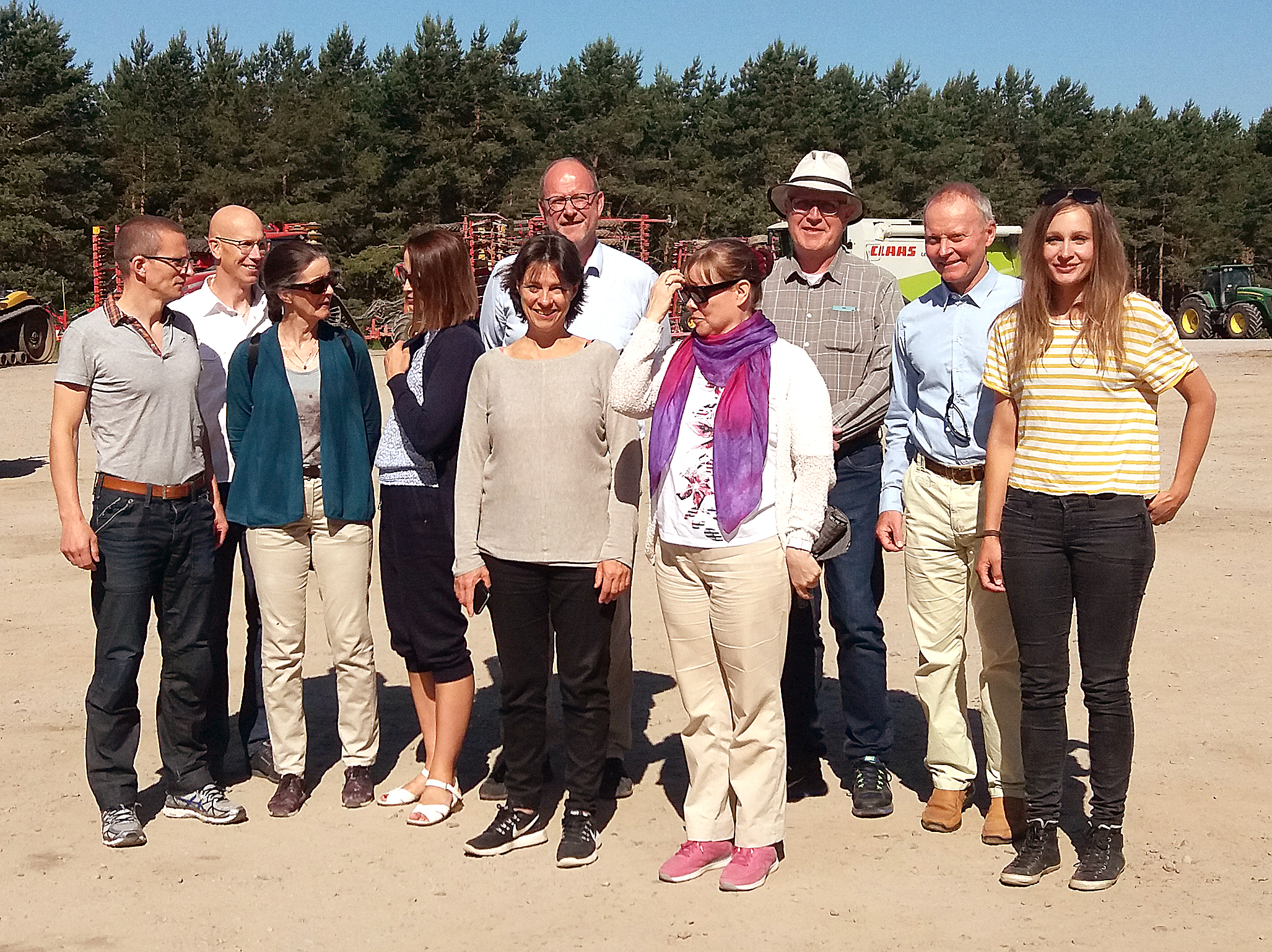
Group of people outside with forest and tractors in background. Photo.
The NKJ board in June 2018.
Tree people sitting at conference table. Photo.
The board meeting was held in the most southern part of Sweden, at Alnarps castle outside of Lund. Alnarp is the Swedish University of Agricultural Sciences. Here Siri Anzjøn, Ann-Margaret Grøndahl and Torfi Jóhannesson are listening to and taking part in discussions.
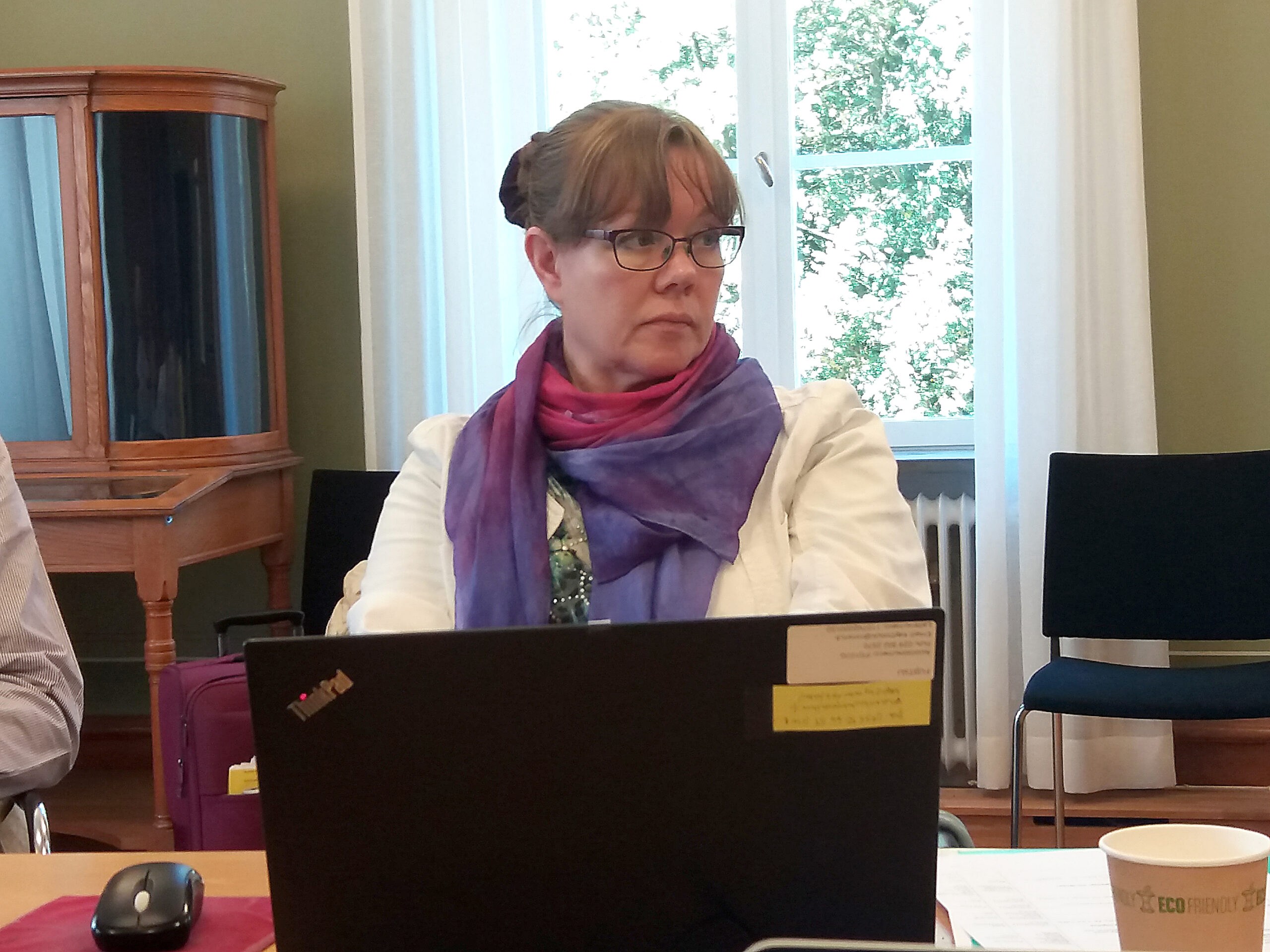
Woman sitting at a computer. Photo.
Suvi Ryynänen.
People sitting at a set table with candel light. Photo.
Dinner and an occasion to talk through all the impressions of the day. From the left: Siri Anzjøn, Niels Gøtke, chairman Nina Solheim Flæte, Sveinn Margeirsson and Suvi Ryynänen
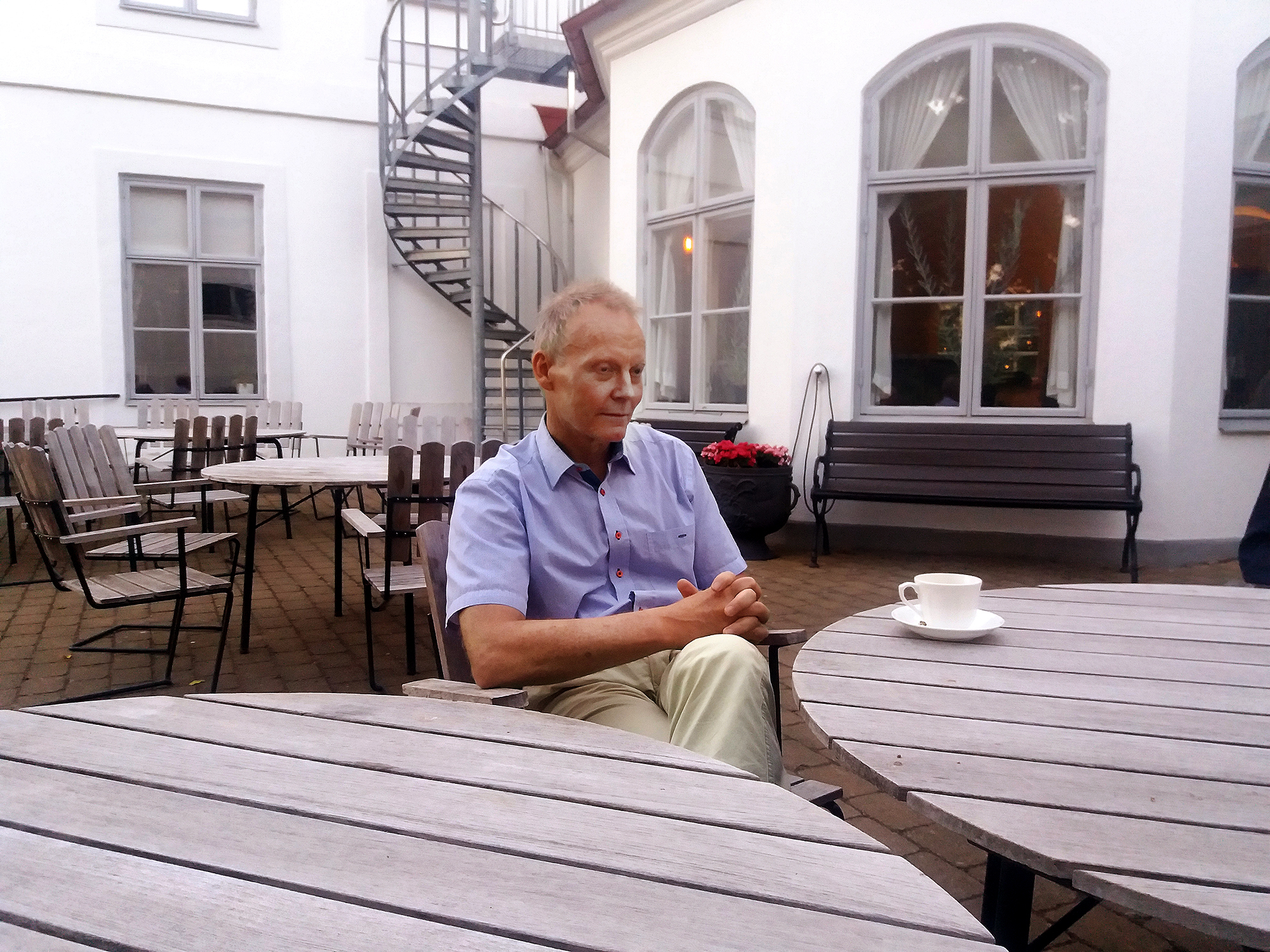
Man sitting outside at a coffee table. Photo.
Niels Gøtke having a nice cup of coffee outdoors, the summer evening is warm.
Landscape in sunset. Photo.
Beautiful evening after a day full of fruitful discussions, decisions and contacts.
Close up on purple flowers, white mansion in the background. Photo.
Morning at Bjärsjölagårds castle and time for excursion.
Three men standing outside at a farm. Photo.
Hans Ramel (in the middle) owns Öveds Kloster, which is the first stop for the day. We got to know a lot about the terms for a big Swedish farm and gets an inside perspective from practitioners.
Dog sitting by the door of a tractor.
One of the coworkers at Öveds Kloster.
Group of people walking on a field, large group of cows in the background. Photo.
Next stop is KC Ranch.
Group of people standing outside looking at the ground. Photo.
NKJ board found a lot of interesting things visiting KC Ranch.
A heard of cows on a pasture. Photo.
The grass is always greener on the other side of the fence… Carl Axel Dahlgren (next picture), owner of KC Ranch has a system for the grazing of the areas.
Man standing next to pasture with cows. Photo.
Carl Axel Dahlgren, owner of KC Ranch.
Man standing in front of a cow. Photo.
NKJ general secretary having a moment with a cow. Wonder if he got a nice picture?
Four people walking on a field. Photo.
Very dry spring has burnt the pastures at KC Ranch. Now leaving for Hällåkra wineyard.
Group of people standing outside. Photo.
Håkan Hansson (sunglasses in the middle) owns the wineyard together with his wife.
Crop field with black sign in front of it. Photo.
“This is where it all started”. The wine grows in rows down the hills.
Five peple standing next to crops. Photo.
NKJ board inspecting the cultures.
Close up on green plant. Photo.
A glass of nice wine. At least a promising start!
Two men standing and one man sitting at a table outside. Photo.
The Hällåkra wineyard gave lots to talk about.
Group of people sitting outside at a set table. Photo.
Lunch under the trees in the garden, tasting the wine that grew about 100 metres away.
Man standing in a doorway gesturing. Photo.
Ebbe Persson, owner of a farm close to the city Trelleborg. We have a look at the multifunctional protection zones.
Group of people standing on a field looking at small crops. Photo.
Ebbe Persson, in yellow t-shirt, shows the sunflowers at the end of the huge sugar beet field.