
NKJ has got a new logotype!
 This is how NKJ will look from now on. The board meeting October 23th in Norway agreed on this new logo.
If our funded networks want to use it in different occasions we are happy to let you! You can download it here:
This is how NKJ will look from now on. The board meeting October 23th in Norway agreed on this new logo.
If our funded networks want to use it in different occasions we are happy to let you! You can download it here:
Networking can be an act of art – at least in Ås at the Matchmaking Day arranged by SNS, NKJ, EFINORD and NordGen Forest.
Text and photo: Sara Hildebrand
Photos from Matchmaking day (PDF)

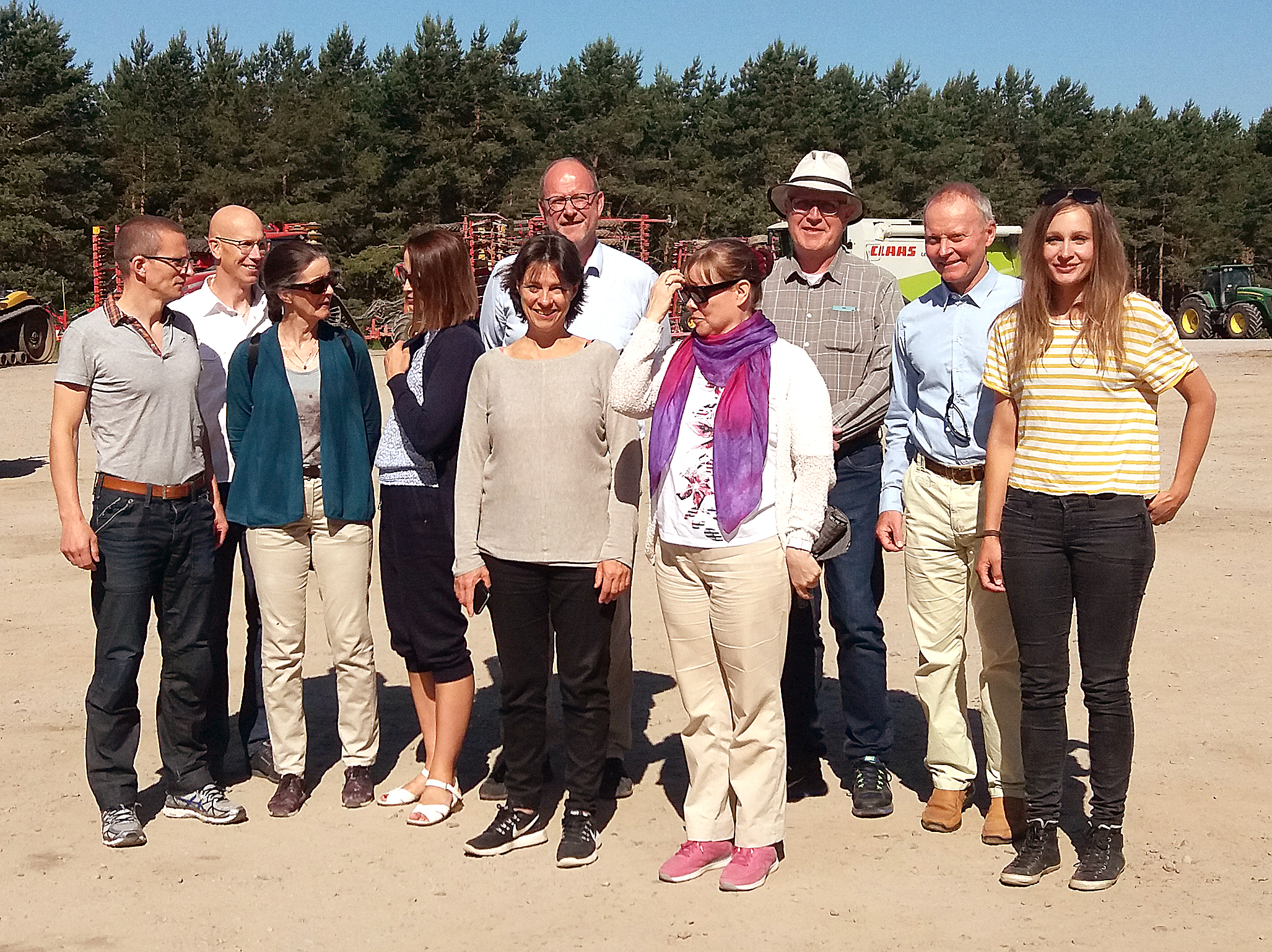
Researchers from several Nordic and Baltic countries met in Ås at the Matchmaking Day. The day started with tea and mingle, first contacts and interests were shared between the participants.
 Introduced to Lukasz Andrzej Derdowski, who’s also conducting research in the field of work-related creativity, the participants were invited to draw themselves and note their key interests. Pinned to the wall and done relations to the people they already knew participating at the Matchmaking day, this activity resulted in a low-tech social network, which got expanded throughout the whole day.
In presentations of SNS, NKJ, NordGen Forest and EFINORD the participants received a short insight into the organisations, the opportunities to receive funding from them and how to be successful in writing applications. Outlined from the EFINORD to be creative in this process and also use social medias, an inspiring speech from Lukasz Andrzej Derdowski continued on the red thread of creativity and the ingredients of a climate in working groups stimulating creativity.
 The intense networking day ended with a last coffee and mingle while completing the low-tech network to a real piece of art with many new, interesting and helpful contacts for the participants.
The NKJ-SNS network Dialogue Biocontrol wants to bring together researchers, commercial actors and end users with interest in biocontrol solutions for North European conditions and to strengthen the dialogue between these groups. Therefore they invite you to a one-day symposium with the titel “Biocontrol in Agriculture and Forestry – research, innovations and markets”.
The venue is Alnarp, Sweden, and the date November 13th. Ramesh Vetukuri, Johanna Witzell, Jarkko Hantula, Lars Moelbak and Birgit Jensen will talk and there will be a lot of discussions to find a way forwards.
Register by e-mail to network coordinator: ramesh.vetukuri@slu.se. Deadline for registration: November 5th.
The extremely hot and dry summer prompted the Swedish minister for Rural Affairs Sven Erik Bucht to gather the Nordic ministers in the agriculture and forestry sector to discuss how to cope with future weather related crises. NKJ can have an important role in the future work.

The reason for the meeting September 19th was the extreme weather, with heat and drought, during the summer that hit many of the Nordic countries hard.
The countries reported about their situation and how agriculture and forestry have been affected. Several different policy initiatives have been taken to remedy the crisis. For example, the countries in the European agricultural policy have opened for harvesting of fallows and other areas that would otherwise have been left until later in the year. Norway has opened for imports of feed from Iceland.
The extensive forest fires were also discussed. There is a need for continued discussion of increased cooperation. This applies not least to the technical side, for example, by avoiding limitations on the movement of technical equipment between countries and cooperation on helicopters with heavy lifting capacity.
The General Secretary of the Nordic Council of Ministers recommended the countries to continue the discussion of potential cooperation opportunities to deal with future crises. Already today there are cooperative bodies in Nordic Council of Ministers that can play an important role in that work, including NordGen, the Nordic Committee for Agricultural and Food Research (NKJ) and Nordic Forest research (SNS).
The Nordic countries are already collaborating on several fronts about the primary sector and the climate. This applies, for example, to road maps for Nordic forest issues, Nordic Forest Solutions and the project Kol i Mark, which deals with the possibilities for increasing carbon dioxide storage in agricultural and forest land. The summer of 2018 has shown that in addition to these measures, it is necessary to start work on adaptation in the short and long term.
The Council of Ministers decided to set up a Nordic working group to meet the challenges of agriculture and forestry in a future with more extreme weather. Discussions will be followed up in the continued work of the Nordic Council of Ministers.
Welcome to Matchmaking Day in Ås, Norway, November 8! This is a great opportunity to make new contacts and get information about funding opportunities.

Welcome to our new Matchmaking day, get inspired, let the creativity flow! You will meet representatives from NKJ, SNS, EFINORD and NordGen Forest and we will tell you about how to successfully apply for funding from us. Lukasz Andrzej Derdowski from University of Stavanger (research area: work-related creativity, innovation, conflicts and intra-group dynamics) will give us insight in how to make our research networks creative and effective and there will be some workshops for you to enhance and improve your networking.
But most importantly, you will meet a lot of new colleagues and get in contact with people that can be important for your research and career!
Our Matchmaking Day is free of charge and young researchers/PhDs can apply travel grant for up to 3 000 SEK per person – more information below!
Date: November 8th, 2018
Time: 0930-1530
Place: Ås, Norway

SNS cover the travel and accomodation costs for PhD students/ young researchers with up to approx. 3 000 SEK/person. Hurry up and register – there is a limited number of grants that will be distributed evenly between countries! October 18th is the latest day for registration if you want us to cover your expenses. Keep your eyes open shortly after – this is when we announce the successful travel grant applicants.
Nordic Forest Research (SNS) is a co-operating body under the Nordic Council of Ministers that strives to enhance benefits for the Nordic region and to contribute to a sustainable society. We provide funding to interlink researchers and to facilitate exchange of brilliant ideas within sustainable forest research in the Nordic countries.
North European Regional Office of European Forest Institute (EFINORD) promotes and facilitate research collaboration and interactions between science and policy in forestry issues that arises in the northern region. A particular focus is given to the bioeconomy research field in combination with natural- and social sciences for a world where forests significantly contribute to sustainable well-being across disciplines.
The primary objective of the Nordic Joint Committee for Agricultural and Food Research (NKJ) is to contribute to promote and coordinate a knowledge-based agriculture and food sector in the Nordic countries. To meet this end, NKJ encourages and provides support to joint Nordic cooperation within agriculture and food research, including forestry and fishery.
NordGen Forest is a Nordic body dedicated to forest regeneration, plants, seed and genetic resources. NordGen Forest addresses conservation and sustainable use of forest genetic resources, by being a forum for researchers, practitioners and managers working on forest genetics, seeds, planting stock and regeneration, and by facilitating the flow of scientific information and knowhow between these groups.
 Nordic researchers gathered to learn from each other about mastitis and to establish new Nordic cooperation in the research field.
Read about the lectures and discussions here! (link not available)
What mutual dependence does the society, total defense and agriculture have in a crisis situation? A conference is arranged on the subject in November, sponsored by NKJ.
 Agriculture produces food, but can also add a lot of force in total defence. The machines, vehicles and knowledge in the sector can be of good use to for example extinguish fires or remove trees fallen over roads.
To do that, the agricultural sector needs fuel, water for the animals, electricity and so on in exchange.
The conference will discuss the needs on both sides to make cooperation possible and efficient.
NJF, Nordiska Jordbruksforskares förening, arranges the conference November 26-27 in Uppsala, Sweden. Here are some of the speakers:
Aud Sjökvist, the Swedish investigator of the efforts during the fire in Västmanland (Salabranden) in 2014. Former General Director of the Health services board of appeal.
Ivar Pettersen, Norwegian Institute of Bioeconomy Research, Norway.
Jyrki Hakola, director of the Dept of basic Supply and Industry, National Emergency Supply Agency, Finland
Björn Kjörlof, Kungl Krigsvetenskapsakademin and former general director of Styrelsen för Psykologiskt Försvar och Pliktverket
There is a possibility to participate with a presentation or poster.
Fredrik Fogelberg
+46 10 516 69 08
Meet NKJ board: Liisa Saarenmaa hopes for a more sustainable food culture in the Nordic region. In ten years, she believes that the food is produced closer to the consumer and that we eat other things than today.
 Liisa is an alternate member of the NKJ board since 2000. In her view, it is the most important task for NKJ to give the Nordic perspective on agriculture and food research. As a whole, the Nordic research community gains a lot through cooperation. The national research get new approaches and there is a greater diversity and creativity.
– NKJ isn’t as visible as it should be, but still has an important role in the preparation of policy.
Liisa is working on various research issues at the Ministry of Agriculture and Forestry in Finland, nowadays focusing more on bioeconomy than on forestry, as she did before.
Before joining the ministry, she was at the University of Helsinki in Finland, at the faculty of forest ecology.
– My research was about rejuvenation and I used AI as a methodology in my doctoral dissertation.
A crucial issue in agriculture and food research is, according to Liisa, sustainability. How can our food production and food culture in the Nordic region be sustainable, and how should we relate to the current climate change? The world’s growing population is also an important issue to consider in agricultural and food research.
In order to make the food culture more sustainable, Liisa thinks we must produce our food close to the consumer – ideally, it should be partly produced in our own homes – and eat less meat.
In addition to being sharp in Nordic bioeconomics, Liisa has another talent: she writes children’s books for her six grandchildren. And she also sails her boat together with her daughter and her family.
Researchers revealed the genome sequence of a devastating tree pathogen. The disease threatens the Scandinavian broadleaf forests and this new knowledge can help stop it!
The new genome resource can be used in future population genomic studies for identification of haplotypes and alleles, and in identifying which effectors may function in infection of woody host plants.
The genome sequence presented provides a resource that can underpin further investigation into the mechanisms of disease caused by P. plurivora, a prevalent but little researched pathogen of important tree species. Our genome sequence of P. plurivora is consistent with the genome architecture of other sequenced Phytophthora species, and we found evidence for elevated ploidy, as can occur in Phytophthora species.
 Plant pathogens belonging to the genus Phytophthora cause disastrous diseases and are responsible for multi-billion dollar losses in agriculture and forestry. Several Phytophthoras such as P. plurivora, P. alni, P. cambivoraand P. cactorum are now endemic problems in Scandinavian forests.
Despite causing diseases of different tree species in forest ecosystems, little is known about the mechanisms by which Phytophthoras invade and colonise trees, or the molecular interactions that take place between tree infecting Phytophthoras and host trees. Significant investment has been targeted to develop solutions for Phytophthora crop diseases, most notably for P. infestans and P. sojae.
By contrast, there has been divestment in tree biology, particularly the genomic and molecular skills. Consequently, we have limited knowledge about the infection biology of endemic and recently discovered pathogenic Phytophthoras that are an increasing threat to trees in Sweden and worldwide, and the tree resistance mechanisms that may control them. The overarching objective of our research is to investigate mechanisms of host-pathogen interactions and to identify ways to control diseases caused by tree infecting Phytophthoras.
Here we present a draft genome sequence of P. plurivora, originally isolated from diseased European beech (Fagus sylvatica) in Malmö, Sweden. Compared to other sequenced Phytophthora species, the P. plurivora genome assembly is relatively compact, spanning 41 Mb.
Article – Draft Genome Sequence for the Tree Pathogen Phytophthora plurivora
Text: Ramesh Vetukuri, Kaia Ekegren
Ramesh Vetukuri is the coordinator of a SNS-NKJ network: