SNS and NKJ seminar: shaping the Nordic digitalized future

SNS and NKJ have initiated the work to prepare the roadmap for the digitalization of the Nordic bioeconomy.


Black tree in silhouette with dark blue background. Illustration.April 17th SNS and NKJ gathered people with expertise in the agricultural, forest and digital sectors to learn, discuss and take a step forward in digitalization of the bioeconomy. Experts say we are on the edge to a structural shift paramount to the industrial revolution – digitalization is around the corner.

Annette Mellbye visited the seminar

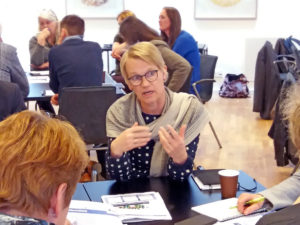
Two women sitting at a table talking. Photo.
Annette Mellbye in talk with other seminar participants.

Our very competent moderator Malin von Essen kept focus and speed the whole day. She first welcomed Anette Mellbye, consultant at Rekode, board member, advisor and digital influencer, as a speaker under the headline “No longer business as usual: digitalization in the bioeconomy”. Her point was how digitalization challenges the operating assumptions of any business, and how this requires organizations to transform both their business models and culture.

Group of people sitting in rows. Photo.
Filip Lundin, consultant at MacLean, was one of the speakers, here in conversation with Kristin Borresen, Graminor.

Next speaker was Filip Landin, consultant at Maclean, talking about ”Internet of Things in agriculture and forestry” and Erick Thürmer, CEO Thürmer Tools, about “Digitalization trends and the art of 3d printing”.

All three speakers were highly appreciated by the audience and their speeches planted new thoughts with their different perspectives at the digitalization question.

Dropbox with presentations for Digitalization and bioeconomy

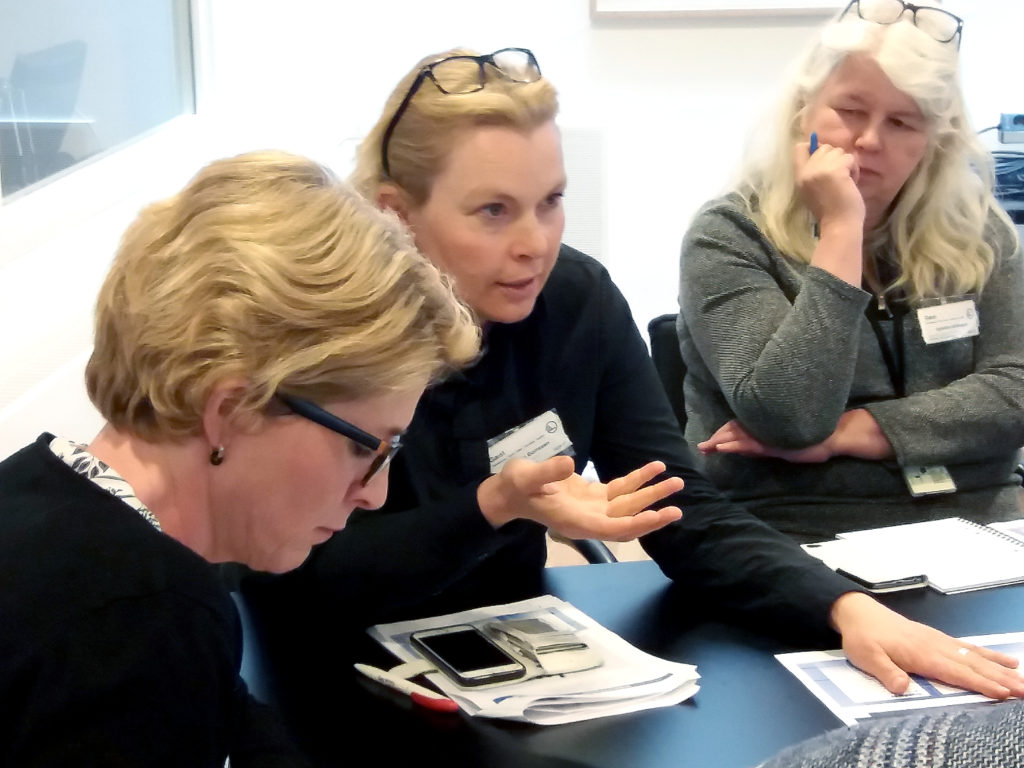
Woman at a table talking. Other peopel in background. Photo. Woman at a table gesturing. Other peopel in background. Photo. Woman at a black table. Other peopel in background. Photo.

Workshop for creating the roadmap

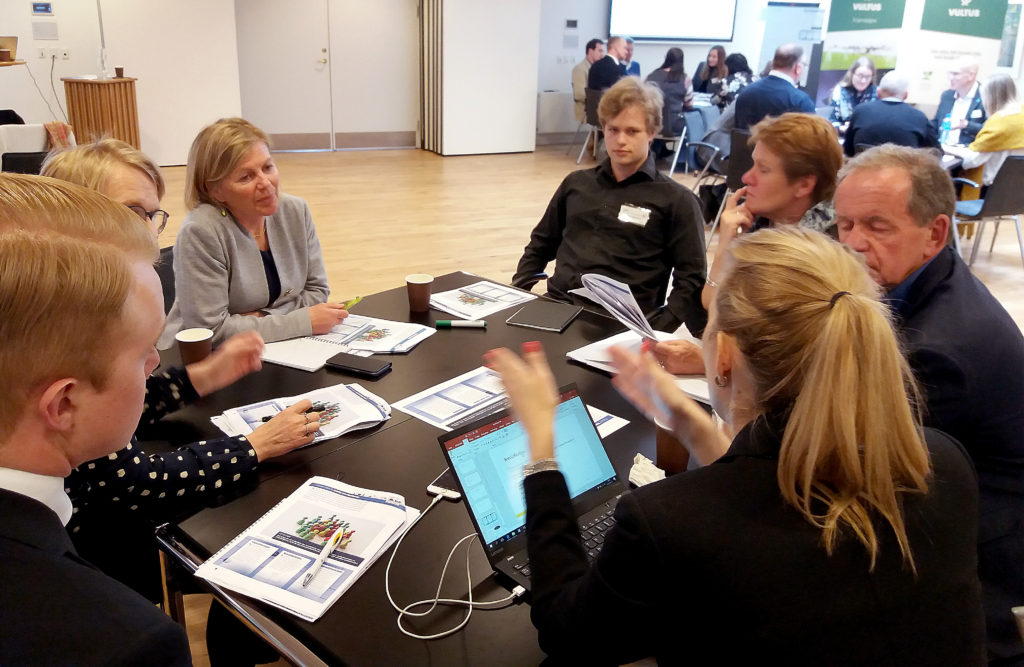
During the afternoon the almost 50 participants were divided into five groups. Each group had some time to discuss five focus areas: competence, safety, technology, organization and infrastructure. A discussion leader kept the discussions on track and took notes for each focus area, so the participants could fully engage in the discussions.

In the workshop all participants had the chance to discuss and affect the way the digitalization process will take. We got the opportunity to gather valuable opinions and get new aspects of the digitalization process in the bioeconomy. This will be the basis for the roadmap for the coming minister meeting in Haparanda this summer when our Nordic ministers will meet and decide on joint way forward to meet the huge opportunities and challenges in a future, digital bioeconomy.

It seems the participants were very pleased after the seminar which was loaded with knowledge, power and ambition. We hope it will serve as a big and positive step in digitalization of the bioeconomy.

Hall filled with people sitting at round tables. Photo.

Man sitting with his back agains the camera looking at papers. Photo.

Close up on hands holding a compile of papers. Photo.

Group of people sitting at a conference talble. Photo.

Erick Thürmer. Portrait.
Erick Thürmer.

Group of people sitting at a black conference table. Photo.

Two group of people at tables. Photo.

Three women sitting at a table gesturing. Photo.

Towards a sustainable milk production

Maybe the Nordic and Baltic milk production is a little bit more sustainable now compared to a year ago? That is what the participants in the NKJ network hope for after one year of network activities.

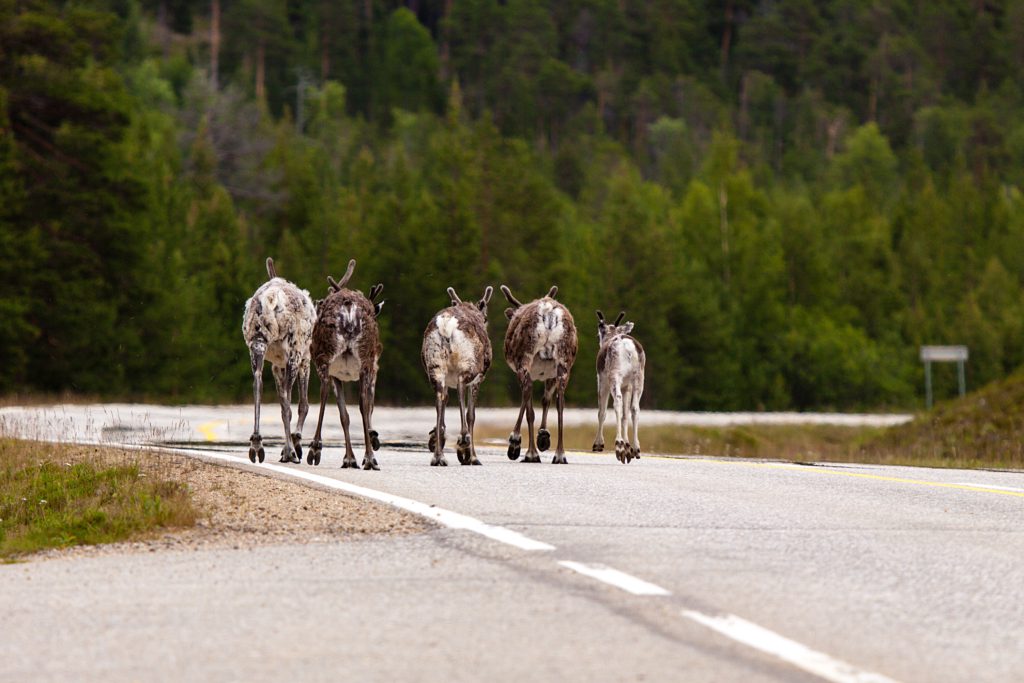
Reindeers walking on a paved road. Photo.

Nordic and Baltic researchers have been networking for a year within the frames of the NKJ network  to increase the knowledge about native cattle breeds milk and reindeer milk. This research could give new opportunities in the Nordic and Baltic dairy sectors and be of help in product development.

Synergies

The networking gives advantages in creating synergies between research groups and coordinating resources in an effective way.  It is also important in giving young researchers possibilities to train and work interdisciplinary.

One practical example of the advantages of the networking, is that milk samples have been exchanged between countries and institutions. Milk samples from native Swedish cattle breeds have been exchanged between Lund University in Sweden and AU Food in Denmark for analyses of protein composition using LC-MS to generate research data on native cattle breeds.

Published article – Comparison of milk protein composition

Important travelling

Poring milk in a glass. Photo.There has also been an exchange of data to enhance research. People have been traveling too between countries and have had the possibility to do experiments.

M.Sc. Tora Asledottir from NMBU in Norway visited AU Food, Denmark, in January and March 2016. The exchange of research data and mobility of Tora Asledottir involved experiments regarding digestability patterns of beta-casein A1 and A2 variants with human gastric enzymes and detection of peptide fragments, caseinomorhins 7 in both variants. The visit involved analyses of flourescamine, peptidomics, SDS-PAGE and protein content. The visit also gave a good chance to discuss the data and paper writing.

Another exchange of brains and data was the visit of the PhD-student Kajsa Nilsson from Lund University in Sweden at NMBU, Norway, in December 2017. The visit involved experiments regarding rennetinduced coagulation phases of coagulating and non-coagulating milk from the Swedish Red breed. It also involved protein profiling of para-κ-casein and genetic variants of caseins and whey proteins using capillary electrophoresis as well as zeta-potential measurements. Analyses, discussion and paper writing was done too.

Events

Workshops, meetings and a PhD course have been arranged by the network. A major outcome has been to promote advanced research and research training for PhD students and young researchers in the region through various organized activities. The network has improved transfer of scientifically based information on dairy technology and food for health science to the industry and established new research collaborations in the Nordic-Baltic region, which is of great importance for future research within the research field of dairy and health.

To facilitate future research exchanges and mobility after the end of the network, a portfolio of research techniques and methodologies have been established between all the network partners.

Bioeconomy and digitalization – Shaping the Nordic future

SNS Nordic Forest Research and NKJ Nordic Agri Research will arrange a workshop about digitalization in the forest and agricultural sectors. June 27th the Nordic ministers make the decisions – April 17th we prepare the roadmap. We will shape the Nordic future!


Black tree in silhouette with dark blue background. Illustration.Experts talk about a structural shift paramount to the industrial revolution. But what implications does digitalization have for the Nordic bioeconomy? Join our workshop and take this opportunity to influence the political agenda!

At the workshop April 17th we will discuss opportunities, challenges and ways to keep the Nordic bioeconomy at the forefront of the development. Areas of common strategic interest will be defined, with the purpose of strengthening the competitive advantage of the Nordic agriculture and forestry.

The day offers short inspiration talks, discussions with experts and a creative workshop were we together shape the agenda going forward and prepare input to the ministers’ meeting in June.


Program for Bioeconomy and digitalization (PDF)

Registration

Please register before the 9th of April (link not available)

Join us in shaping the future of the Nordic bioeconomy!

Time and date: 9.30-16.00, 17th of April
Place: Nordens Hus, Ved Stranden 18, Copenhagen

Info: Maria Tunberg at  or +46 736 14 15 97

FibreTies meeting: preparing for large grant application

The SNS-NKJ network FibreTies will be having a meeting to prepare for a large grant application.

The workshop and network event will be held at  VTT, Espoo, Finland, May 15-16 2018.

The purpose of this meeting is to establish one or more project groups for a large grant application. The outcome aim is that it will result in project applications for H2020, Nordic Built, research councils within the EU and Nordic countries. The focus will be on new possibilities, alternative materials, interesting products and business development in the area of biobased fibers.

FibreTies welcomes companies and institutions to participate. Young researchers/PhD students are encouraged to join the project meeting workshop and thereby contributing to the discussion on the way forward for more industrial use of non-fossil, non-food biobased fibres.

The deadline for registration is May 1st 2018.

Enlightening about Neonectria cankers

The meeting on Neonectria cankers on trees was fruitful for the participants in the SNS–NKJ network Neonectria cankers on trees.

Close up on branch. Photo.
Canker wounds with numerous fruiting bodies of Neonectria ditissima on apple. Photos from the book of abstracts, see link in the bottom of the page: Venche Talgø

“Neonectria cankers on trees – meeting of changed climatic conditions and increased problems in Scandinavian horticulture and forest production by interdisciplinary networking” is a newly started network. First meeting was at Norwegian Institute of Bioeconomy (NIBIO) at Ås February 6 2018.

The whole meeting day gave a nice overview of current knowledge in research about the diseases Neonectria-species is causing both in forestry, landscaping and in horticulture.

Status of each of the three Neonectria pathogens were presented from each of the four countries: Denmark, Finland, Norway and Sweden. In addition there was one invited speaker for each pathogen; Roland Weber from Germany covering Neonectria ditissima, Ana Perez-Sierra from England covering Neonectria neomacrospora and Richard O’Hanlon from Northern Ireland covering Neonectria fuckeliana.

Lecture hall with ongoing presentation. Photo.
Meeting participants listening to one of the interesting lectures about Neonectria. Photo: Dalphy Harteweld

One comment after the meeting was: this was an eye opener for me, I was not aware of the disease on the other trees.

The network will meet in late autumn and discuss how we can cooperate in the future and how we can use knowledge obtained on one tree and with one Neonectria specie to improve on other trees and other Neonectria-species.


Download book of abstracts for Neonectria cankers meeting


Climate change – an important issue for reindeer husbandry

Climate change is a challenge in many ways, and that applies to reindeer husbandry too. NKJ co-organized a seminar about future needs for research in the sector.


Reindeer husbandry Boy and reindeer standing in winter landscape. Illustration.Nordregio has written a report, Reindeer Husbandry in Sapmi, commissioned by NKJ. The report is a summary of the relevant research done the last ten years. It was presented at, and formed a basis for, a seminar about reindeer husbandry research in Tromsø, Norway, before Christmas.

Overview

The purpose of the seminar was to get a good overview of the problems and possibilities the reindeer husbandry is facing in the future.

– We want to develop the reindeer husbandry moving towards future, says Sunna Marie Pentha, adviser at the Norwegian Agricultural and food department.

Environmental issues

Anna Berlina, Nordregio, initiated the seminar with presenting the report to the participants. Ethel Seljevold, Fylkesmannen, Troms, talked about the opportunities there are in reindeer husbandry, and was followed by Carlos das Neves and Torill Mørch, Norwegian Veterinary Institute, who talked about the challenges the sector approaches when it comes to animal health.

But the most important and urgent issue to discuss might be the climate change, which changes the terms of reindeer husbandry. The warming up of the atmosphere makes the snow come later. That makes it harder for animal owners to gather their herd and transportations become difficult because the snowmobile can’t be used. It also interacts with the movements of the herd because lakes and other waters doesn’t freeze when it usually does. The possible effects of climate change on pastures was summarized by Kari Anne Bråthen, University of Tromsø.

Technical development

Rune Storvold, NORUT, och Erlend Vinje, NIBIO, gave some insight in the new opportunities technology brings to reindeer husbandry.

– The last four or five years, more and more animal owners use drones to handle their reindeers, says Sunna Marie Pentha.

The second day of the seminar was all about the future research needs in the sector. Marit Meløy from the Norwegian Saami Parliament initiated the discussions, and then the participants had discussions in smaller groups to pinpoint the needs and give their suggestions.

– The workshops gave some really useful concrete suggestions for further research, says Sunna Marie Pentha.

– NKJ can be important for the future reindeer husbandry because of the contacts you have, and the funding you can give, she says.

Download the report – Reindeer Husbandry in Sapmi (PDF)

The Nordic countries in numbers

Everything in the Nordic countries is countable – and the Nordic Council of Ministers have done it! In the New report  there is statistics of demography, economics, labourmarket and – not least – bioeconomy.

Did you know that the Nordic Council of Ministers develops an index of how dynamic the 74 regions in the Nordic countries are? You can learn about that in the yearly report as well as you can get to know that the Nordic countries are the most digitalized in the world and that we have really good conditions for developing a new bioeconomy.

Read about it and download it for free here! (link no longer available)

Neonectria cankers in focus

The SNS-NKJ network Neonectria Cankers on trees is having its first meeting february 6th 2018 in Ås, Norway. The outcome of the network activities will be an overview article of the Neonectria cankers in the Nordic countries, and this meeting is a start.

During the day, the participants will hear guest lecturers about Neonectria ditissima, Neonectria neomacrospora and Neonectria fuckeliana. Representatives from the Nordic countries will give a picture of the state of Neonectria cankers in their countries.

The organizers of the meeting have collected photos of Neonectria cankers and reference lists of publications in the participating countries to make an abstract book for the meeting. We look forward to see the book and to hear about experiences of the meeting!

See the program for Neonectria cankers in focus (PDF)

“NKJ is important by contributing to creating meeting places”

Nina Solheim Flæte will lead the work for strengthening Nordic cooperation in bioeconomy the four coming years. She succeeds Jan Svensson.


Nina Solheim Flæte. Portrait.The new chairman of NKJ is looking forward to contribute to increased Nordic cooperation in agriculture, food and reindeer sectors.

– NKJ has an important role by contributing to creating meeting places and being an arena for interaction between the national research councils and ministries, Nordic researchers and business actors, she says.

Nina Solheim Flæte wants NKJ to strengthen Nordic cooperation in bioeconomics.

–By uniting fellow players in the Nordic region for joint efforts, we can achieve more sustainable and resource-efficient agricultural and food production.

A major theme internationally, especially after the climate agreement in Paris, is the binding of carbon to agricultural land. Expected changes in the Nordic climate can affect carbon emissions and increase carbon emissions from soil to atmosphere.

The Nordic Council of Ministers sees the need for increased knowledge about the effects of climate change on carbon content in soil, and possible Nordic solutions to maintain or increase carbon content. Among other things, there is a desire to harmonize methodology for modeling and emission calculations that can reveal carbon capture and emissions in Nordic agricultural land that can be used for reporting to the Intergovernmental Panel on Climate Change (IPCC).

– NKJ will lead the work on following up the Council of Ministers’ decision. This is a great opportunity to focus on an important theme and to strengthen cooperation between the Nordic countries in this area, says the new chairman of NKJ.

Nina Solheim Flæte

Background

Nina Solheim Flæte is educated in Norway, at the Norwegian University of Life Sciences. She has a broad background in agriculture, specialized in plant sciences and she has a PhD in baking quality in wheat.

After a period of research, she changed her career to work with management in The Norwegian Agriculture Agency. She was employed at the Research Council of Norway November 1st 2017. At the Research Council she will, among other things, work with the program BIONÆR whose main objective is to trigger research and innovation for value creation in the Norwegian bio based sectors.

NKJ call for activities 2018-2019: Digitization

NKJ (Nordic Joint Committee for Agricultural and Food Research) makes a call for researcher networks, especially those working with digitization of agriculture.

Satellite and earth seen from space in background. The focus of the call is on how utilization of digitization can contribute to sustainable management of biological resources, increased competitiveness and reduced climate impact from primary production, but networks can be funded without this focus.

Sweden will lead the work of the Nordic Council of Ministers in 2018. Based on the possibilities of digitization, the Swedish precidency for the agricultural sector will focus on sustainable management of biological resources, increased competitiveness, resilience and reduced climate impact from primary production and diversified rural economics. How can utilization of digitization contribute to increased degree of innovation, more efficient use of biomass and a more resource-efficient agricultural sector?

The network has to have participants from at least three Nordic countries and the main applicant need to be a researcher or communicator at a research institute or research organization. It has to self-finance the activities to an extent of 50%.

Applications must be submitted no later than 12:00 CET on February 28th 2018.