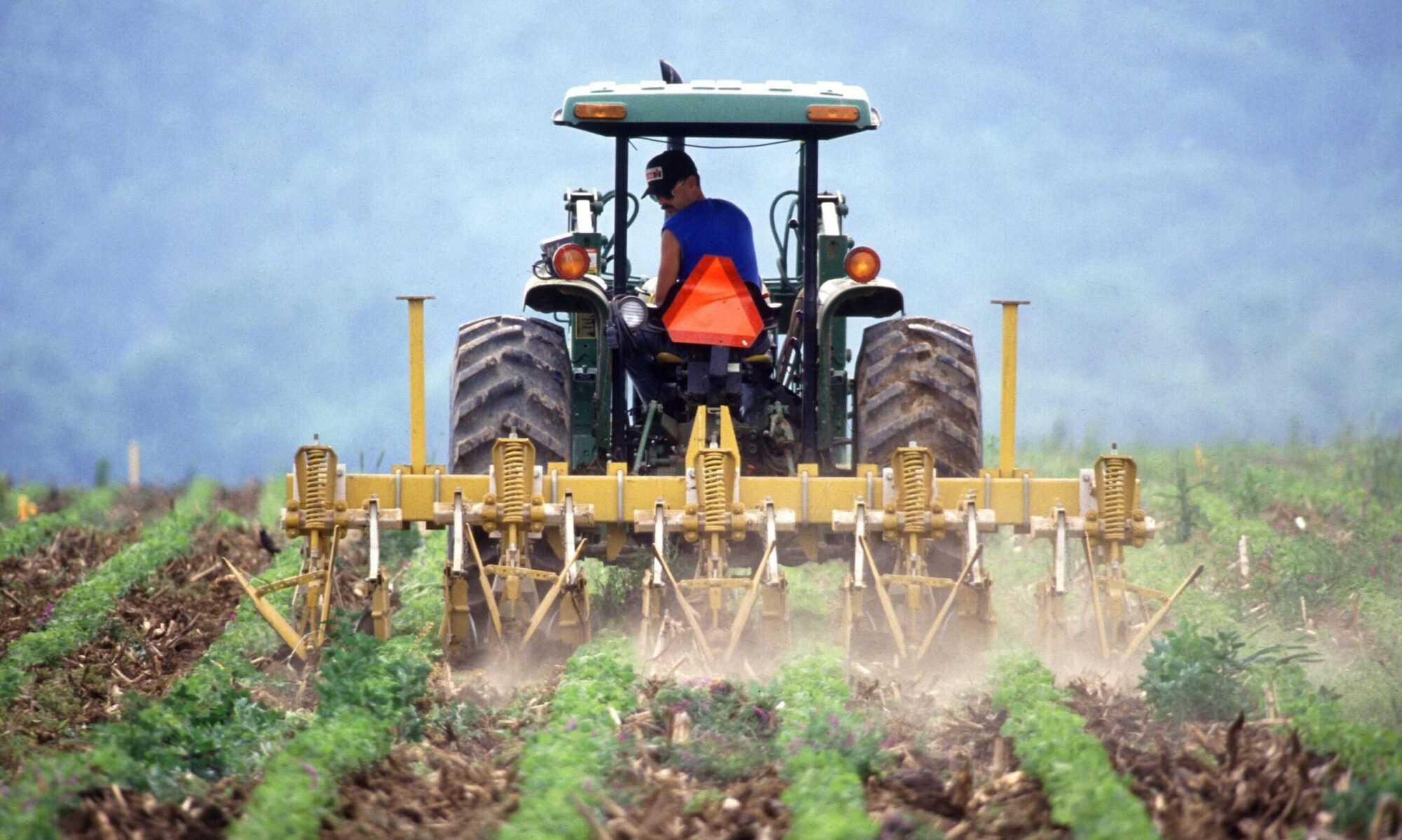
NJF (Nordic Association of Agricultural Research) got two observators in the NKJ board.
The two observators are Jarkko Niemi (LUKE), president of NJF, and Silvia Gaiani (University of Helsinki), secretary general of NJF.
It is the obvious similarities in target groups and research areas that has led to the collaboration between the two organisations. Collaboration can led to synergies and a more effective work for a sustainable future agriculture sector in the Nordic region.
In coming newsletters and updates in the NKJ social channels you will find information about joint events and projects! Sign up for the NKJ newsletter here!
The climate change demands adaption by the agriculture sector. Two workshops has been arranged by a NKJ funded researcher network, NordCrop, about the screening of existing genotypes for resilience that has proved that resilience traits is available in the current breeding material.
The two workshops were open for all stakeholders allowed discussion on future directions with a combination of invited international speakers and presentation from partners. Two PhD courses on applied crop physiology allowed for networking between young scientist from partner countries.
The results of the workshops can be implemented through stakeholders and the last years of fluctuations in the climate stresses the acute need to future proof the Nordic agricultural production.
The focus on the NordCrop network was in agriculture, with special emphasis on crop tolerance to stresses, both direct global change related and aspects of diseases and methods to detect stresses, but also genetic characterization and molecular biology. All these aspects are needed to cope with climate stresses and also support the green transition in the Nordic countries.
The Resilient Northern Crops Network (NordCrop) aimed to contribute to the establishment of a better understanding of the responses of field crops in the Nordic region to multiple abiotic and biotic stresses which has become a severe challenge to the food supply.
PLEN Living Labs at the University of Copenhagen in Taastrup welcomed students from Lars-Erik Larsson high school in Lund, to present research projects and the latest techniques. The goal was to create interest for the digitalised green sector – especially among the female students.
Scrolla ner för svensk text
The study visit was a pilot project and organized by NKJ and SNS in collaboration with the Nordic Testbed Network. PLEN Living Labs is part of the Nordic Testbed Network, which in turn is run by NKJ and SNS.
– When the evaluation is done, we will see if the students found it as exciting as we do! In that case, we’ll do it again, says Sofie Andersson, project coordinator at NKJ.
– The purpose is to broaden the students’ understanding of what it can mean to work in the bioeconomy and thereby increase interest among female students in choosing the currently male-dominated educations connected to digitalisation. The sector needs all the smart minds it can get, and then we can’t shut half of the population out! It’s important that everyone in society is represented by those who develop the future technology.
The students, at their final year in high school, were shown how the research is conducted and the purpose with it, but also how the researchers have ended up where they are today. They have all taken more or less crooked paths to their jobs with technology and research for the future green sector. The students themselves are just about to choose which path they will take towards their working life. Maybe they got new ideas about what they want to do after visiting PLEN Living Labs?
Sofia Isgar thought it was nice to get in direct contact with the researchers at PLEN Living Labs and find out more about what an education in the field of natural sciences can lead to.
– I probably knew that agriculture and forestry were quite unequal industries, but not that it is the same in research, she says.
The visit to PLEN Living Labs hasn’t completely convinced her to work in the green sector, but she is planning to go ahead with something in the natural sciences.
Follow the Lars-Erik Larsson students to PLEN Living Labs:
Swedish text
PLEN Living Labs på Köpenhamns Universitet i Taastrup tog emot studenter från Lars-Erik Larsson-gymnasiet i Lund, för att visa upp sin forskning och den senaste tekniken inom det gröna området – inte minst riktat till de kvinnliga studenterna.
Studiebesöket var ett pilotprojekt och anordnades av NKJ och SNS i samarbete med Nordic Testbed Network. PLEN Living Labs är en del av Nordic Testbed Network, som i sin tur drivs av NKJ och SNS.
– När utvärderingen är gjord får vi se om studenterna tyckte att det var lika spännande som vi tycker! I så fall gör vi om det, säger Sofie Andersson, projektsamordnare på NKJ.
– Meningen är att visa hur intressant den gröna sektorn är, inte minst för kvinnor. Sektorn behöver alla smarta hjärnor den kan få, och då kan vi inte stänga ute halva befolkningen! Det är viktigt att alla i samhället är representerade av dem som utvecklar framtidens teknik.
Sistaårsstudenterna fick höra om hur forskningen bedrivs och vad den går ut på, men också hur forskarna har hamnat där de är idag. De har alla tagit mer eller mindre krokiga vägar till sina jobb med teknik och forskning för framtiden i den gröna sektorn. Studenterna själva är i startgroparna att välja vilken väg de ska ta mot sitt arbetsliv. Kanske har de fått nya idéer om vad de vill göra efter besöket på PLEN Living Labs?
Sofia Isgar tyckte det var kul att få direktkontakt med forskarna på PLEN Living Labs och få veta mer om vad man kan göra med en utbildning inom det naturvetenskapliga området.
– Jag visste nog att jord- och skogsbruk var rätt ojämställda branscher, men inte att det är likadant inom forskningen, säger hon.
Besöket på PLEN Living Labs har inte helt övertygat henne om att arbeta inom den gröna sektorn, men något inom naturvetenskap kan det ändå bli till slut.
See the inspiration talks from the NKJ matchmaking day December 14th 2023! Scroll down for links
The matchmaking day was an opportunity to connect to researchers in the same area of interest and to get inspired. The focus at this matchmaking day was living labs and lighthouses, to connect to the main goal of the Mission “A Soil Deal for Europe”: to establish 100 living labs and lighthouses to lead the transition towards healthy soils by 2030.
At the matchmaking day we dissected how you as a researcher can utilize living labs and lighthouses. We offered an opportunity to connect with other researchers who are looking for collaboration opportunities. NKJ informed about the current open call.
The participants were also inspired by speakers from light houses and living labs in the Nordic region. See the presentations here:
NKJ has an open call for networks in agriculture and food. We want as many nordic researchers as possible to exchange knowledge, therefore we arrange a matchmaking day for you to find new colleagues, to elaborate your scientific project further and to get inspired.
When:December 14th 2023, 13.30–16.00 CET Where:Online via Zoom, link will be sent out in advance of the meeting Registration: Register to the event by sending an email (name, research area and institution) to
The main goal of the Mission ‘A Soil Deal for Europe’ is to establish 100 living labs and lighthouses to lead the transition towards healthy soils by 2030.
On the matchmaking day we take a deep dive into how you as a researcher can utilize living labs and lighthouses. We also offer an opportunity to connect with other researchers who are looking for collaboration opportunities on research connected to living labs and/or light houses. Matchmaking with other researchers will be carried out in smaller groups to maximaze the chance for the participants to gain new contacts in their own area of interest.
The groups will mainly focus on food and agricultural research in living labs/light houses connected to:
Climate resilience
Soil health
Plant health
You will be inspired by speakers from light houses and living labs in the Nordic region. NKJ will also inform you about the current open callthat can fund your future networking activities.
AGENDA 13.30 Welcome 13.35 Inspiration talk: PLEN Living Labs 13.55 Inspiration talk: cooperation on light houses, Mære landbruksskole 14.15 How to apply for funds from NKJ: tips and trix 14.30 Networking workshop 16.00 Finish
OPEN CALL: NKJ now welcomes applications from researcher networks in all aspects of food and agriculture. We want to facilitate collaboration between researchers in the Nordic countries, increase synergies and bridge gaps between research and practice.
Deadline for application: 31 januari 2024
This call is open to applicants from all fields of research within food and agriculture. NKJ wants to facilitate collaboration between researchers in the Nordic countries and link national research projects where considerable positive outcomes can be reached through a wider regional scope. Nordic collaboration increase synergies in agriculture and food sector research.
NKJ supports the creation of Nordic networks of researchers that can make it easier to apply for funding and participate in European collaborations e.g. Horizon Europe.
To have the chance to be granted, the network should include applicants from at least three Nordic countries. Each gender must be represented by a minimum of 40% of the participants in the network, and NKJ welcomes applicants and participants of other genders. Young researchers should be included in the network.
Network outputs should be useful for the Nordic community and should include knowledge exchange across national borders.
You can apply for maximum 300.000 SEK, and you will need co-financing of at least 50% of the total budget.
The focus areas in the NKJ strategy can give you some inspiration:
Increase sustainability and resilience in agriculture and food production in a growing bioeconomy
Strengthen the Nordic region’s position in agricultural and food research within Europe
Use land resources as a basis for value creation and regional development as well as improved supply capacity, reduced environmental and climate impact and better adaptation to the climate
Strengthen the knowledge base for sustainable reindeer husbandry
Strengthen and develop the New Nordic Food project to promote Nordic food culture and strengthen the food system
Strengthen equality within the bioeconomy with a particular focus on gender and the position of children and youth
BUT this call is open for applicants from all fields of research within food and agriculture!
Only a minor share of the consumed apples in Nordic countries are domestically produced. Therefore, minimal post-harvest losses are critical to better satisfy consumers’ demand for locally produced fruit and to improve growers’ economy. Text: Larisa Gustavsson
Researchers, stakeholders and decision makers has gathered during the last two years, to exchange and assemble knowledge and pave the way for efficient collaboration on storage losses.
The common strategic goal has been to minimize post-harvest losses due to storage decay. To achieve that, the network Nordic Apple Networkbrought together researchers and stakeholders in two informative meetings and moved forward in our understanding of important pre- and post-harvest factors leading to development of storage rots.
This has also had an immediate impact, since some ideas for new research projects were developed. For example:
• Which are the main causes for postharvest losses?
• Physiological disorders – conditions on which these are occurring
• Fungal diseases – how to identify them?
A platform for a long-term collaboration involving researchers and the apple industries in Sweden, Denmark, Norway and Finland has been built.
The first case of African swine fever in the Nordic region has occurred in Swedish Fagersta. How does this affect the Nordic managing of the wild boars?
The NKJ report “Vildsvin i de nordiska länderna” from 2022 aims to map and manage the Nordic needs and prerequisites for controlling the wild boar population in the region. But with African swine fever active in the region, the perspective may change.
Petter Kjellander was the author of the report, and he is a professor at the ecology department at Swedish University of Agricultural Sciences in Sweden. Here he gives a new perspective of Nordic wild boar policy.
Expanded Nordic cooperation is the key to creating a more resilient bioeconomy, especially in the wake of polycrises. NKJ and SNS can now present a policy brief with recommendations to strengthen and develop the Nordic bioeconomy.
The basis for the recommendations are desktop studies of Nordic initiatives on crises management and resilience, and multiple dialogues with experts from the Nordic bioeconomy.
Addressing the challenges of one crisis, let alone multiple crises affecting the region simultaneously, requires coordinated efforts. Many different perspectives must be taken into account and how the different countries’ bioeconomies work must be clear.
The potential for more joint Nordic efforts to strengthen the resilience of the bioeconomy looks promising. The countries have similar social structures and topographies, there are already companies operating throughout the region, similar political ambitions in, for example, climate measures and existing networks and initiatives create good conditions for Nordic cooperation. It has also been shown that there is a strong interest in jointly meeting the challenges associated with crisis preparedness and crisis management in the bioeconomy.
This policy report presents five policy recommendations. Nordic decision-makers and stakeholders can enable effective progress towards a more resilient Nordic bioeconomy by:
1 Developing a joint roadmap for a resilient Nordic bioeconomy
2 Strengthening the resilience in the Nordic -bioeconomy value chains by identifying and addressing critical dependencies
3 Enabling an efficient, accessible, and safe -sharing of high-quality bioeconomy data across the Nordic region
4 Supporting knowledge sharing between Nordic crises communication functions
5 Integrating the recommendations for a more -resilient Nordic bioeconomy in the development of the Nordic Cooperation Program for 2025-2030
A webinar on the Nordic food systems was held June 14th. The aim of the webinar was to explore the commonalities, differences and peculiarities of the Nordic national food systems and try to understand if there is just one common Nordic approach to food sustainability or many.
The main outcome of the Nordic webinar was that all the Nordic countries are different in terms of food production, retail system, policies and consumers behaviour. Before talking about a Nordic sustainable food system, the different national aspects should be taken into consideration. Still, a Nordic vision might be possible, provided that policy makers promote more cooperation and a holistic approach to sustainable food systems.
Two main projects, from Iceland a project on blue economy and from Sweden a project on Sami food in elderly houses, were presented.
Most of the speakers at the webinar agreed on that a new Nordic model on sustainable food systems is possible, provided it is integrated with local approaches, as every country has its own peculiarities. The main conclusions from the discussions are:
Food self sufficiency is an important issue for the Nordic countries: Norway is only 40% self sufficient, Finland is self sufficient in terms of meat and diary production, but not for fruits and vegetables and oatley/rye.
Meat consumption is an important aspect of the Nordic diet. In Norway it has doubled in recent years, while fish consumption is slightly decreasing. The same could be said for Finland, where meat and dairy consumption are still very high, despite some local policies aiming to decrease at least meat consumption.
In Finland dietary recommendations are not met by the Finnish population. Finns are interested in trying new foods but long term adoption of new food does not always follow.
Faroe Islands have small scale farming and fishing, and are importing the majority of food they consume. Depsite all this, food and farming traditions are strong and passed on from generation to generation.
In Sweden a specific project “Healthy ageing for Indigenous communities in India and Sweden with focus on nutricous and culturally adequate food provision” funded by the Swedish Research Council for Health, Working Life and Welfare (2022-2025) is helping Sami elderly people to eat their traditional food in elderly houses.
In Iceland a project run by University of Iceland on barriers and challenges to circular blue economy, found out that there is a strong need for holistic mapping of the waste streamsand a strong competition for natural resources. More collaborations and an enhanced institutional capacity would benefit the sector.
Denmark is promoting food innovations through the Food Bio cluster Denmark which supports companies i promoting and accelerating food innovations.
The webinar was arranged by the NKJ co-funded researcher network “The role of Nordic research in transition to sustainable agro-marine food systems”. The network aims to start an interdisciplinary, multi-stakeholder dialogue among the eight partner universities and other relevant institutions on the role of Nordic research in transition to sustainable agro-marine food systems.